College of Industrial Technology
Marinduque State University
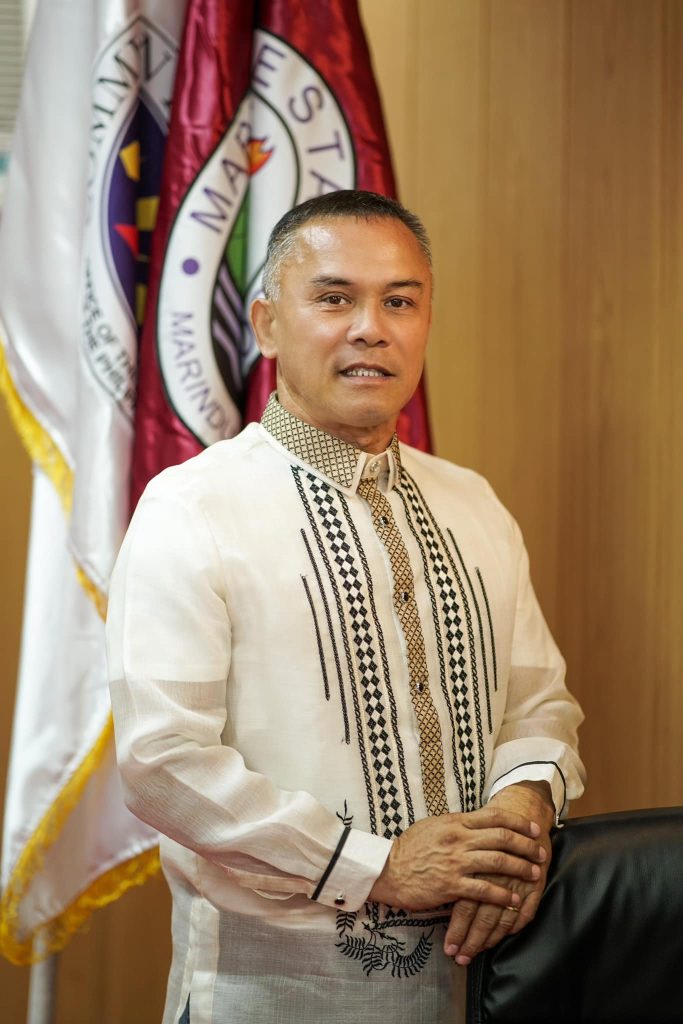
Mr. Mario T. Mascareñas
Associate Professor V, Dean
About Us
When Marinduque State University was established in 1952 as Marinduque School of Arts and Trades by virtue of Republic Act 805, the School had been operating the two-year Technical Curricula. During that year, Industrial Technology was a separate section which was headed by Mr. Respicio A. Javier. The following courses were offered at the time: Technical Automotive Mechanics, Technical Building Construction, Technical Drafting, Technical Electricity, Technical Cosmetology, Garments Trades and Technical Food Trades.
In Academic Year 1975 – 1976 the Department of Education Culture and Sports (DECS) Order No. 28 s. 1975 authorized the school to offer the four-year Bachelor of Science in Industrial Technology Curriculum (BSIT).
During the term of College President Dr. Rodrigo G. Monterey Sr., a new organizational structure was created that paved the way for the merging of the two largest sections of the College: Engineering and Technology to become the School of Engineering and Technology (SET).
By AY 2005 – 2006, during the term of College President Dr. Romulo H. Malvar, Technology was separated from Engineering and became a separate School, the School of Industrial Technology (SIT) that offered a two-year craftsmanship curriculum, a three year Technician program and a four-year Bachelors’ degree.
During the term of College President Dr. Merian P. Catajay-Mani, a new organizational structure was created with the School of Industrial Technology merging with the School of Information and Computing Sciences and became known as the School of Technology (STech), but by 2020, the Industrial Technology program was again separated to become what it is today, the College of Industrial Technology.
Programs Offered
Level III Re-Accredited by the Accrediting Agency for Chartered Colleges and Universities in the Philippines (AACCUP), Inc.
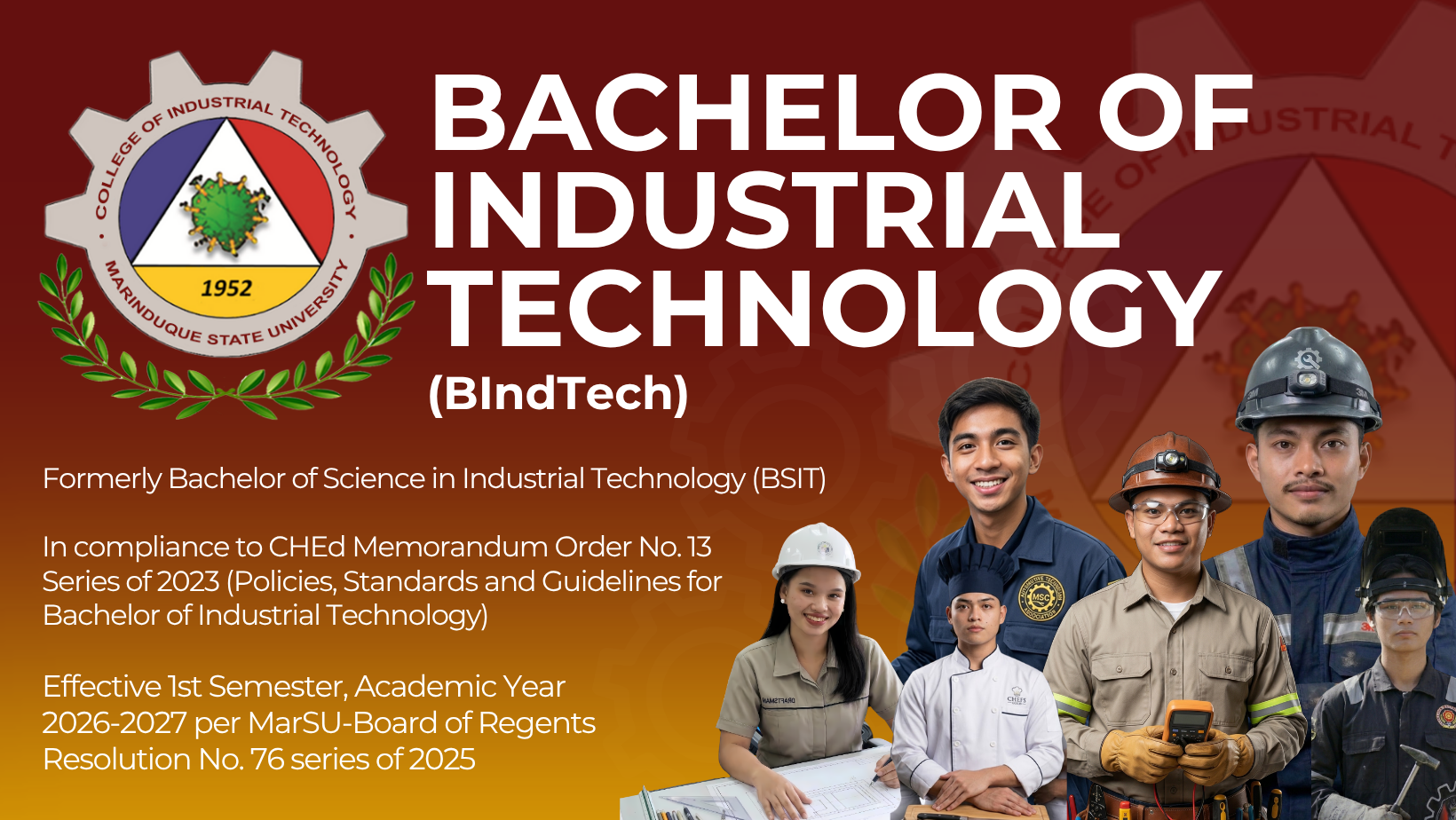
The Bachelor of Science in Industrial Technology (BSIT) program proudly embarks on a new chapter as it transitions into the Bachelor of Industrial Technology (BIndTech)—a strategic transformation that reflects both regulatory compliance and a forward-looking vision for technical education.
Effective First Semester, Academic Year 2026–2027, this transition is implemented in accordance with Commission on Higher Education Memorandum Order No. 13, Series of 2023, which outlines the Policies, Standards, and Guidelines for the Bachelor of Industrial Technology program. This initiative is further reinforced by the approval of the Marinduque State University Board of Regents through Resolution No. 76, Series of 2026.
More than a change in name, the shift to BIndTech represents a renewed commitment to delivering industry-relevant, competency-based education. The redesigned curriculum is anchored on the goal of equipping students with the practical skills and technical expertise required in today’s evolving industrial landscape. Through strengthened collaboration with industry partners, the program emphasizes hands-on training, adherence to national trade competencies, and the development of graduates who are not only knowledgeable but also field-ready industrial artisans.
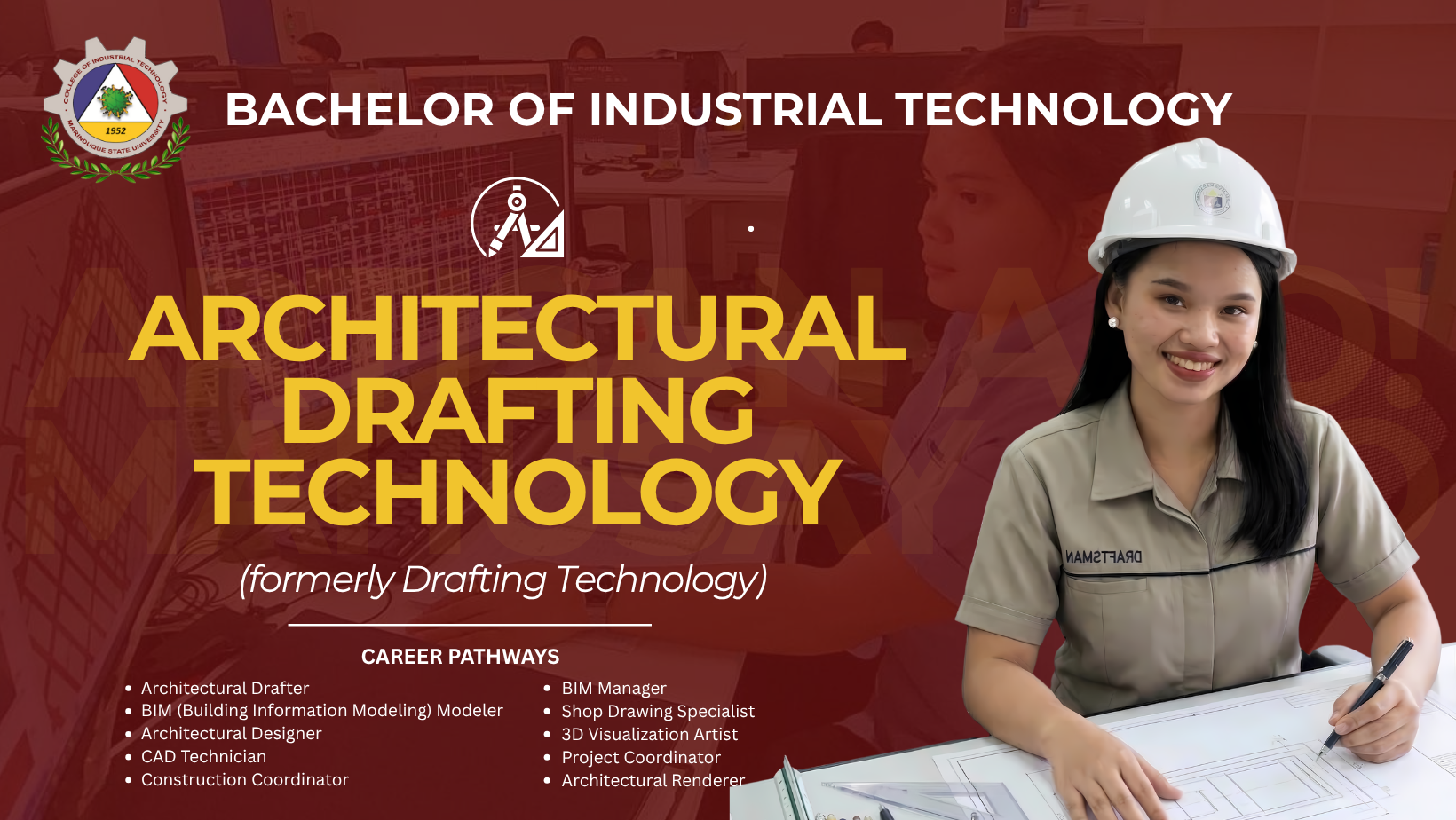
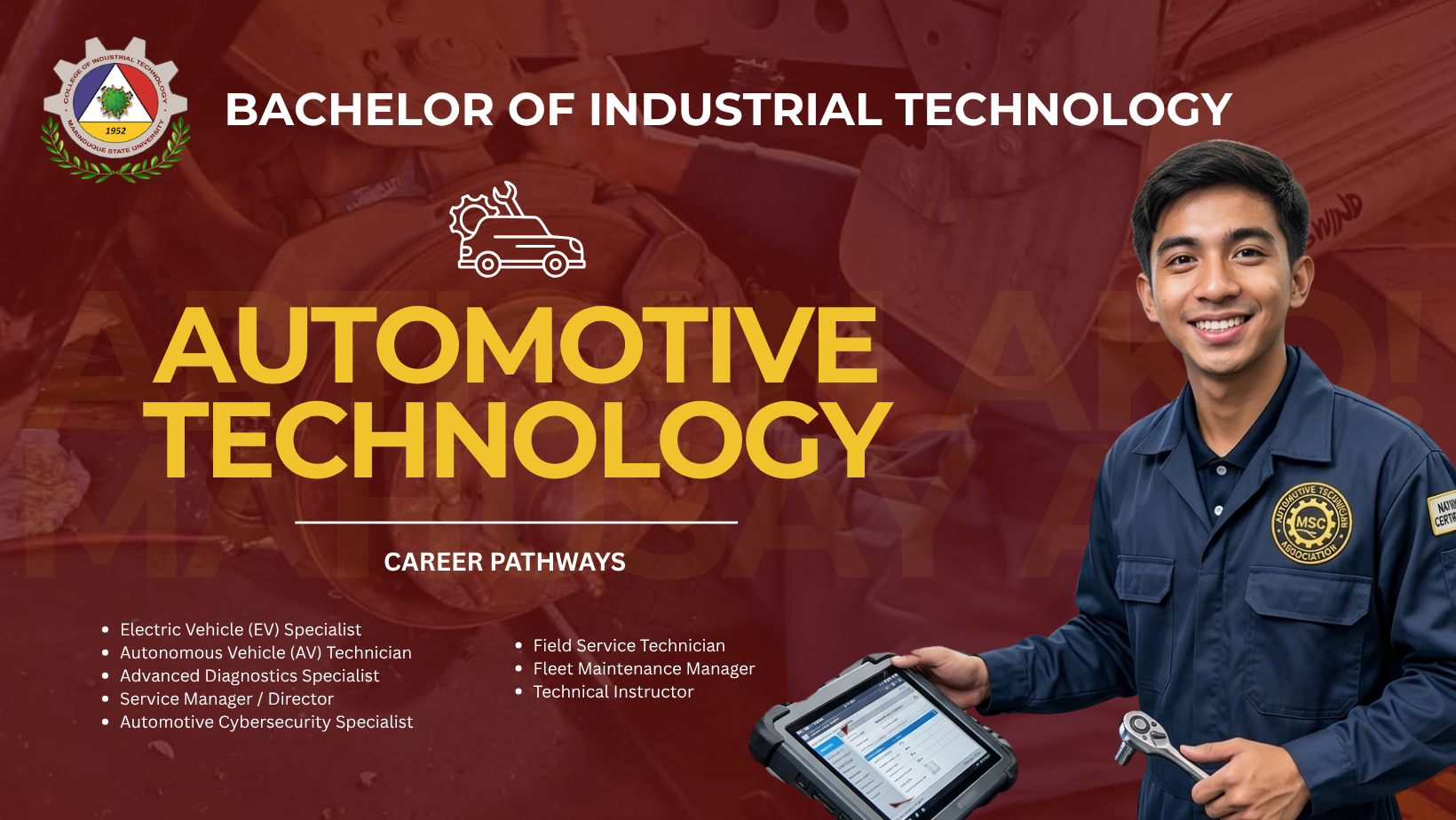
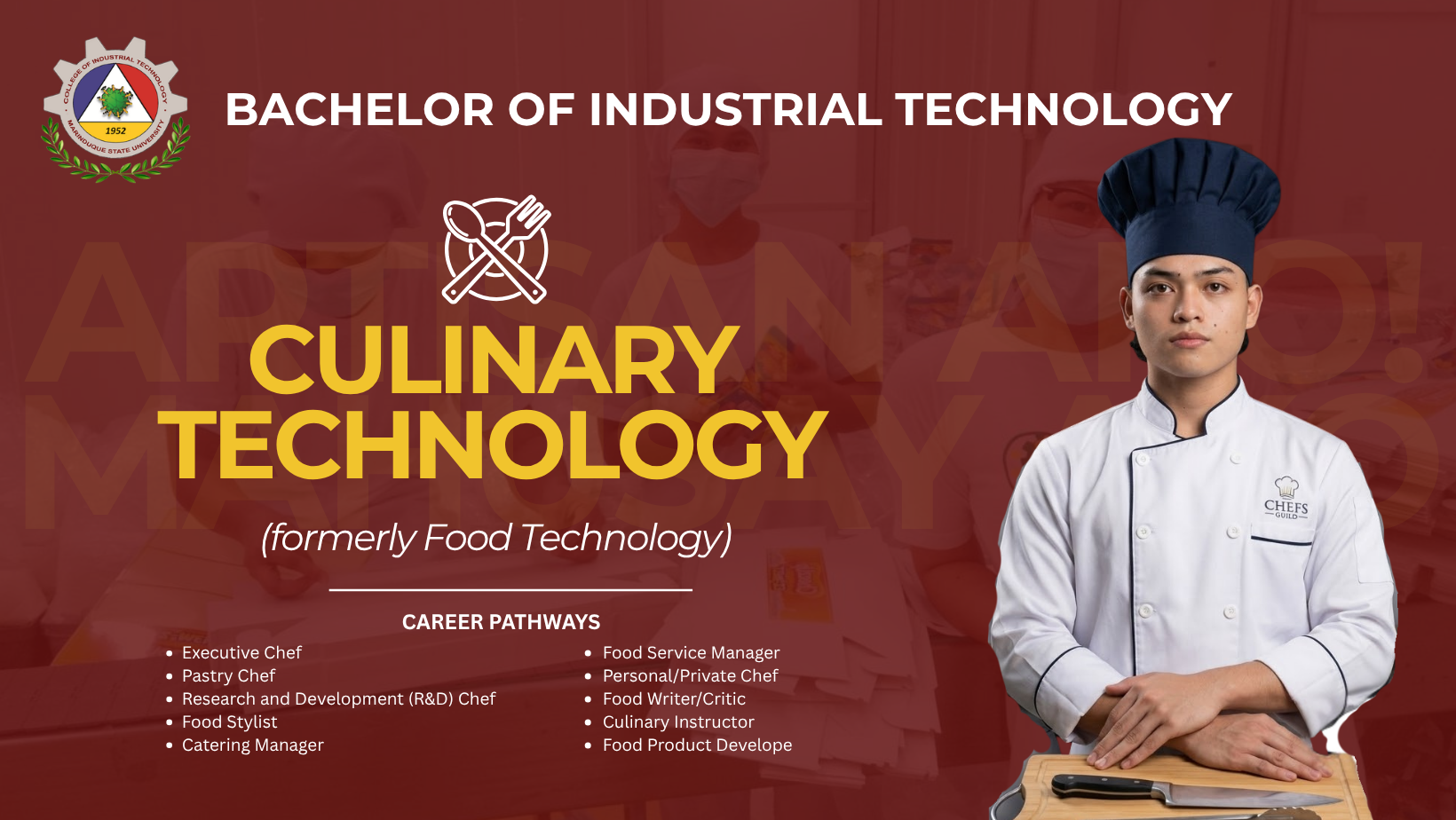
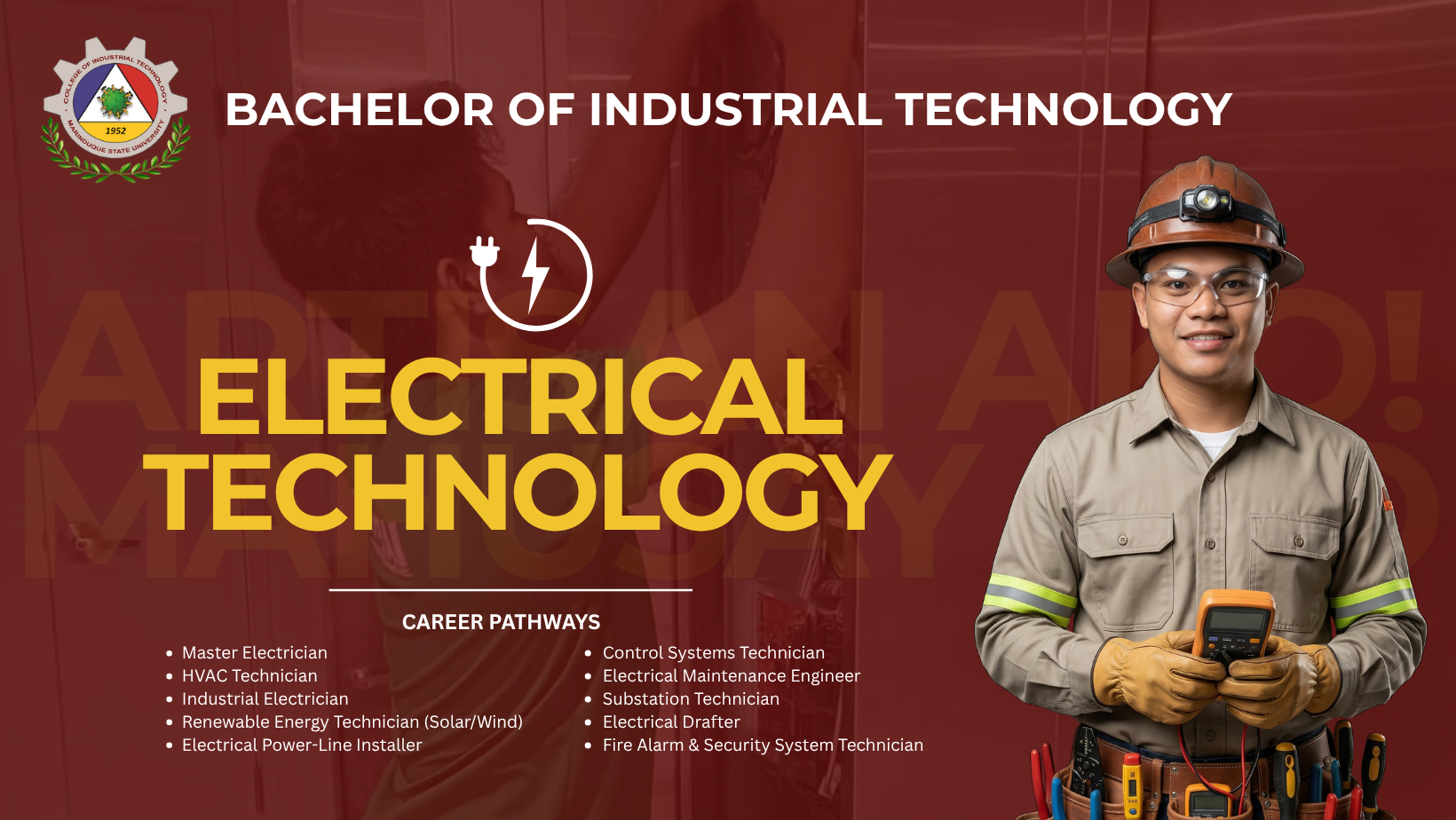
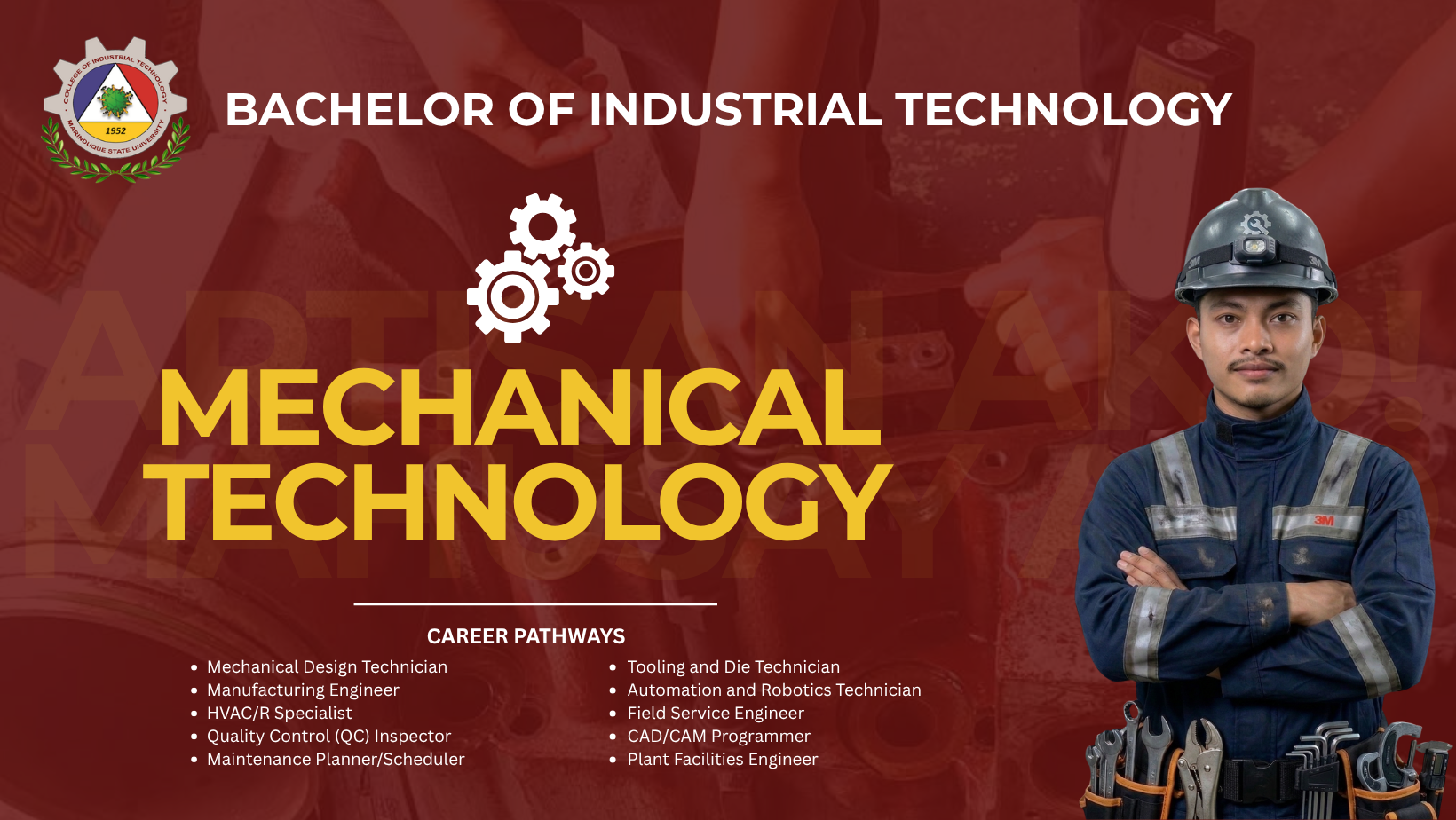
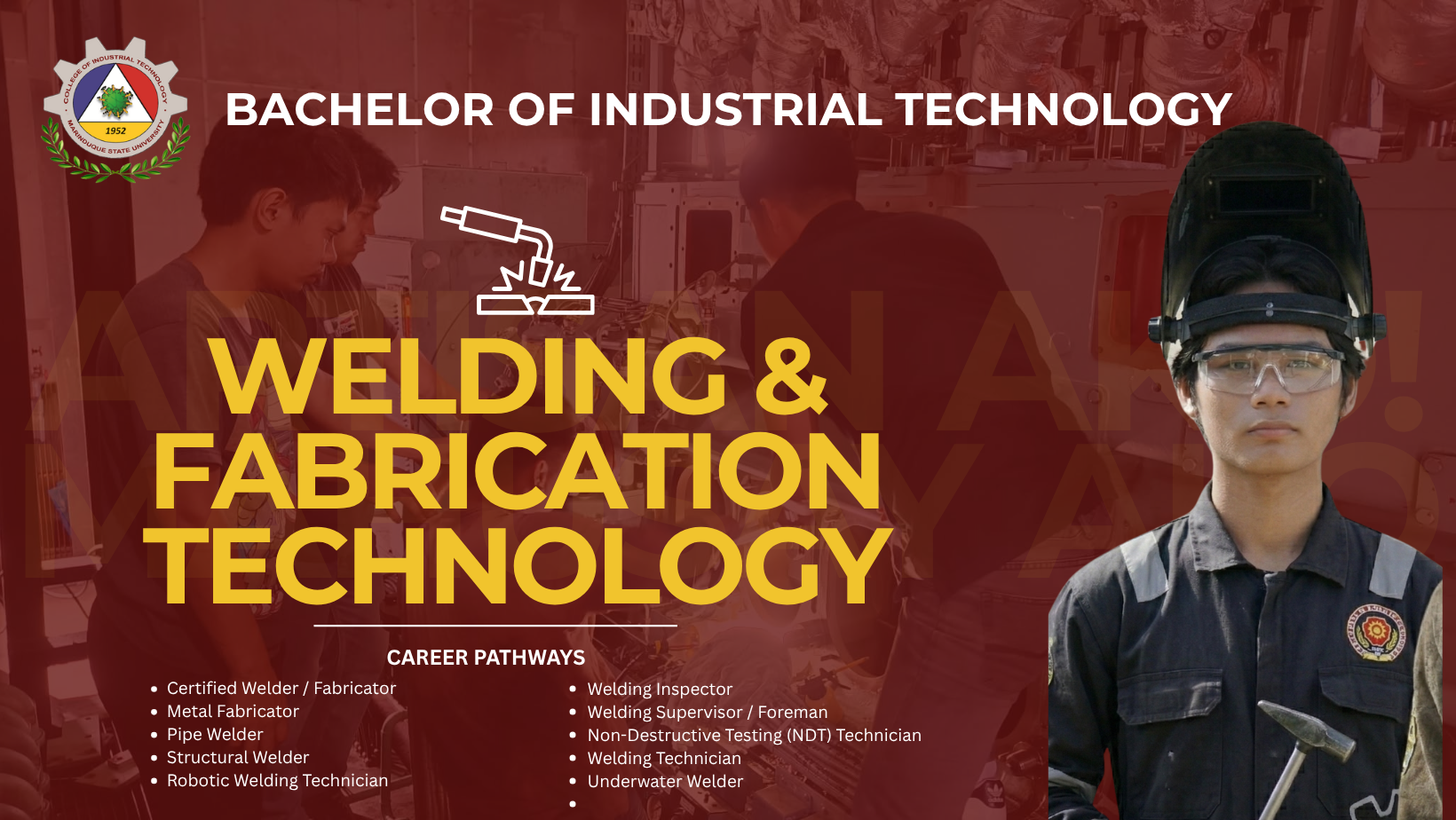
As part of this evolution, key specializations have been refined to better align with industry demands. Architectural Drafting Technology now advances the former Drafting Technology track, while Culinary Technology enhances the previous Food Technology specialization. Alongside these, the program continues to provide comprehensive training in Automotive Technology, Electrical Technology, Mechanical Technology, and Welding and Fabrication Technology—ensuring a broad spectrum of technical expertise for aspiring professionals.
With BIndTech, Marinduque State University strengthens its role in shaping a new generation of skilled artisans and industry practitioners—individuals who are ready to innovate, build, and lead in their respective fields.
Artisan ako, Mahusay ako!
Areas of Specialization
Architectural Drafting
- Architectural Visual Communications 1-Graphics 1
- Architectural Visual Communications 2-Visual Techniques 1 (Monochromatic)
- Computer-Aided Design & Drafting for Architecture 1 (AutoCAD)
- Architectural Design 1-Introduction to Design
- Architectural Visual Communications 3-Graphics 2
- Architectural Visual Communications 4- Visual Techniques 2 (Polychromatic)
- Architectural Design 2-Creative Design and Fundamentals
- Architectural Design 3 – Creative Design and Architectural Interiors
- Architectural Planning 1 – Site Planning and Landscape Architecture
- Building Technology 1-Building Materials
- Architectural Design 4 – Space Planning
- Building Technology 2 – Construction Drawings in Wood, Steel and Concrete
- Building Utilities 1-Plumbing and Sanitary Systems
- Computer-Aided Design & Drafting for Architecture 2 (Revit/Autodesk Inventor)
- Architectural Planning 2 – Fundamentals Of Urban Design and Community Architecture
- Building Utilities 2-Electrical, Electronics and Mechanical Systems
Automotive Technology
- Body Repair and Paintin
- Fundamentals of Automotive Technology
- Automotive Electrical System
- Small Engine Repair and Motorcycle Servicing
- Car Care Servicing, Emission Control, and Tune-up
- Automotive Computer-Aided Design (CAD)
- Automotive Electronics
- Power Train and Conversion System
- Automotive LPG System
- Automotive Air Conditioning
- Engine Overhauling and Performance Testing
- Hybrid and Electric Vehicle
- Body Management and Under Chassis Electronic Control System
- Electronics Engine Management Control System
Culinary Technology
- Culinary Fundamentals
- Culinary Mathematics
- Culinary Nutrition
- Culinary Arts 1-Fruits and Vegetable Preparation
- Regional Cuisine
- Culinary Arts 2-Meat Cookery, Dairy and Desserts
- International Cuisine
- Culinary Arts 3-Mixology
- Culinary Processing – Low and High Temperature
- Advance Culinary Technology
- Culinary Baking 1-Cakes and Pastries
- Culinary Baking 2 – Bread Baking
- Restaurant Supervision and Catering Operation
Electrical Technology
- Electricity and Electronics Principles
- Direct Current Circuits
- Shop Processes, Tools, and Equipment
- Philippine Electrical Code
- Residential Wiring Systems
- Alternating Current Circuits
- Industrial Wiring Systems
- Electrical Instruments and Measurements
- Electrical Machines
- Transmission and Distribution Systems
- Industrial Motor Controllers
- Power Production and Management Systems
- Logic Circuits
- Electrical Computer-Aided Design
Mechanical Technology
- Electrical Circuits
- Machine Tools and Processes 1
- Machine Tools and Processes 2
- Welding Processes
- AC and DC Machine
- Machine Drawing – Computer Aided Design
- Materials Science and Engineering
- Machine Tools and Processes 3
- Jigz and Fixture
- Tool and Die Design
- Lean Manufacturing
- Kinematics Machinery
- Manufacturing Processes
- Planning and Costing for Manufacture
- Machine Tools and Processes 4
- Destructive and Non-Destructive Testing
- Machine Tools and Processes 5
Welding & Fabrication
- Introduction to Welding Processes
- Maintenance and Management
- Electrical Circuits
- Fundamentals of Welding and Allied Processes
- Advanced Manual Arc Welding Processes
- Welding Consumables and Equipment
- Advanced Gas Welding Brazing and Cutting
- Welding Metallurgy
- Destructive and Non-Destructive Testing
- Inert Gas Shielded Arc Welding and High Technology Welding Processes
- Plasma, Electron Bean Welding and Laser Welding
- Fabrication Costing and Estimating
- Automatic Welding Processes and Welding Robot Programming
- Pipe Welding and Blueprints Reading
- Welding Jigs and Fixture Design
Technical Courses
Math and Sciences
- Chemistry for Industrial Technologists
- Comprehensive Mathematics
- Physics for Industrial Technologists
Applied Courses
- Introduction to Information Technology
- Computer Programming
- Industrial Drawing
- Materials Technology Management
- Quality Control and Assurance
- Industrial Organization and Management
- Industrial Psychology
- Technopreneurship
- Production Management
Professional Courses
- Occupational Safety and Health
- Project Study 1 with Intellectual Property Rights
- Project Study 2
- Student Internship Program 1
- Student Internship Program 2
Non-Technical Courses
Required General Education
- Understanding The Self
- Readings in Philippine History
- The Contemporary World
- Art Appreciation
- Mathematics in the Modern World
- Purposive Communication
- Science, Technology, and Society
- Ethics
General Education Electives
- Environmental Science
- Human Reproduction
- Research Statistics
Mandated Course
- Life and Works of Rizal
Physical Education
- PATHFIT 1
- PATHFIT 2
- PATHFIT 3
- PATHFIT 4
National Service Training Program
- National Service Training Program 1
- National Service Training Program 2